

Blurry vision sends most people looking for a stronger prescription at their next eye exam. Dryness sits behind the haze more often than you’d guess, and new lenses won’t do much about it. Yes, dry eye can blur your vision because a healthy tear film keeps the surface of your eye smooth enough to focus light.
Your tear film works like a thin coat of water on glass. Spread evenly, it lets light pass straight through. Dry patches scatter that light, and your view goes soft.
Types of Dry Eye That Can Blur Your Vision
There are 2 types of dry eye, and the difference changes how we treat it.
Evaporative dry eye shows up when your tears disappear too fast, usually because the oil glands along your eyelids are blocked. That oily layer is what holds the watery part of your tears in place.
Aqueous deficiency comes down to volume. Your tear glands don’t make enough fluid to keep the surface covered, so bare spots form between blinks.
Many people have a mix of both, so dry eye care rarely looks the same from one patient to the next.
How to Tell If Blurriness Comes from Dry Eye
One clue stands out. Blink hard and watch what happens. If your vision sharpens for a second before sliding back into a blur, dryness is a likely reason. A fresh layer of tears resurfaces your eye for a moment, then evaporates again.
Timing tells you something too. Blurriness from dry eye comes and goes, so you might read comfortably at 8 a.m. and squint through the same page by 3 p.m. Blurry vision rarely shows up on its own. Watch for a few of these alongside it:
- Redness that lingers into the evening
- A gritty feeling, like sand under your eyelid
- Sensitivity to bright light
- Eyes that water for no clear reason
- Contacts that turn uncomfortable partway through the day
When Blurry Vision Needs a Closer Look
Some blurriness points to something beyond dryness. If your sight stays fuzzy after you use drops and rest your eyes for a day or 2, book a visit instead of waiting it out.
Any sudden change deserves prompt attention, especially blur that arrives with pain or flashes of light.
Everyday Habits That Contribute to Dry Eye Blurriness
Small daily routines can dry your eyes out more than you’d guess. A few tweaks can bring relief.
Screen Time and Digital Eye Strain
When you stare at a screen, you blink about half as often as normal. Fewer blinks mean your tear film dries out and your vision starts to blur.
Try the 20-20-20 rule. Every 20 minutes, look at something 20 feet away for 20 seconds. It gives your eyes a chance to reset and re-coat.
Contact Lenses
Contact lenses sit right on your tear film and can pull moisture away over the course of a day. By dinner, your eyes may feel tired, and your vision may look cloudy.
Dry Air
Your surroundings matter as much as your lenses. Furnace heat and low winter humidity speed up how fast tears evaporate, so a humidifier in the rooms you use most can help.
Age, Medications, and Health Factors
Dry eye becomes more common after 50 as your tear production slows. That’s a normal part of how eyes change over time.
Some medicines, like antihistamines and certain blood pressure pills, can reduce how many tears you make. If you notice new dryness after starting a medication, mention it at your next visit.
Health conditions play a role as well. Thyroid disorders, diabetes, and autoimmune conditions like Sjögren’s syndrome can all affect tear quality.
How Your Optometrist Tests for Dry Eye
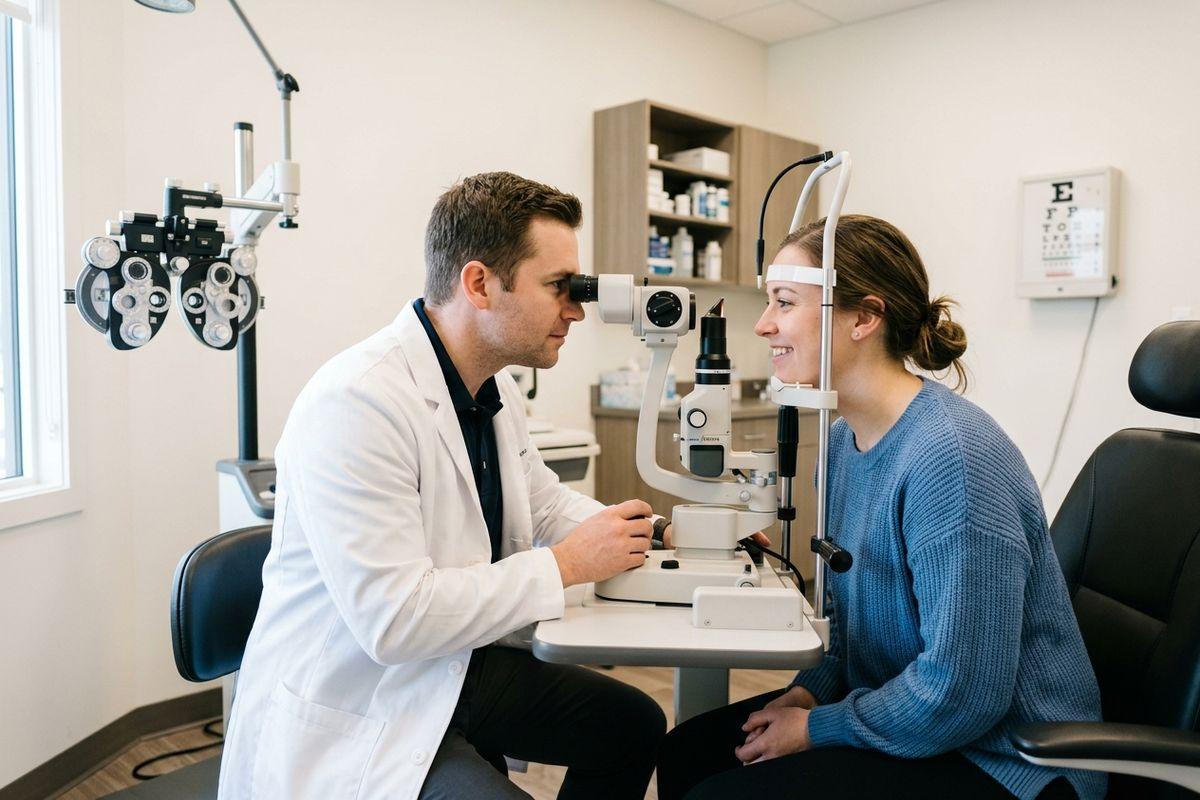
Finding the reason behind your blur takes more than a quick look at your eyes. Your optometrist has a few tools for measuring what your tears are doing:
- Tear film imaging times how quickly your tears break apart after a blink
- Meibography photographs the oil glands in your eyelids to show whether any are blocked or shrinking
- Tear osmolarity testing measures the salt concentration in your tears, which reflects how stable the film is
Read together, these results show which type of dry eye you’re dealing with and point us toward a plan that fits.
Ways to Manage Dry Eye and Support Clearer Vision
Treatment works best when it targets the cause of the dryness. Artificial tears add moisture and can reduce blurriness throughout the day.
Warm compresses soften hardened oil so your glands drain properly, and 5 minutes each evening can make a difference over a few weeks. For more stubborn cases, prescription drops can calm inflammation, while intense pulsed light and radiofrequency treatments work on gland function directly.
Clear Up the Haze Behind Your Blurry Vision
Vision that sharpens with a blink and fades a second later is worth bringing up, even if it only bothers you some afternoons. An exam can tell you whether your tear film is behind it. If not, we’ll figure out what is.
Book an eye exam with Doctors EyeCare and let’s sort out what’s blurring your view.