Kids don’t often tell us when their vision feels off. Most assume everyone sees the world the same way they do, so the clues usually come from their habits at home and in the classroom.
Myopia and hyperopia are 2 common focusing problems in children, and they show up in nearly opposite ways. Myopia makes faraway objects look blurry, while hyperopia makes close-up tasks like reading harder on the eyes, so the signs depend on whether your child struggles more with distance or near vision.
What’s the Difference Between Myopia and Hyperopia?
Myopia, also called nearsightedness, means your child sees close objects clearly but has trouble with faraway ones. The whiteboard or the puck at the far end of the rink can look fuzzy, while a book in their lap stays sharp.
Hyperopia, or farsightedness, works the other way. Your child’s eyes have to work harder to focus up close, which can lead to tired eyes and headaches during reading or homework. In mild cases, a child’s eyes can make up for hyperopia on their own.
An easy way to keep the 2 straight is to remember that a nearsighted child sees near things well.
Signs of Myopia in Kids
Many children with myopia never mention blurriness, since their vision is all they’ve known. Pay attention to how your child watches TV, reads, and plays. Watch for signs like these:
- Sitting close to the TV
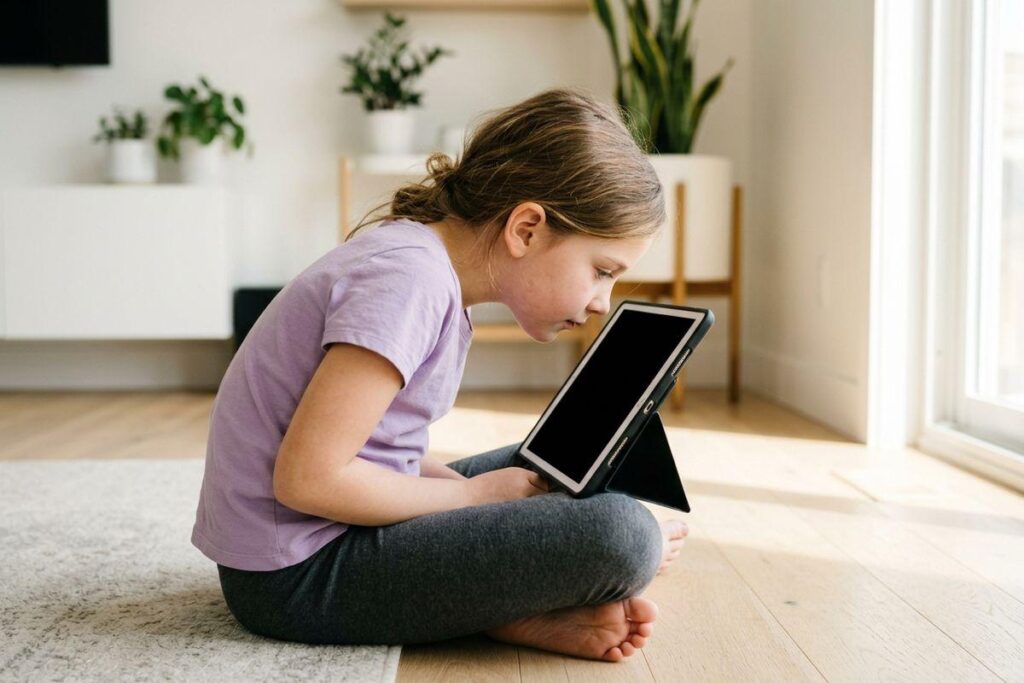
- Holding books or tablets near their face
- Squinting to see things across the room
- Trouble reading the board at school
- Losing interest in sports that need clear distance vision
Myopia now tends to start earlier than it did for previous generations, often around age 6 or 7. Get your child outside, too. About an hour of outdoor time each day may help delay myopia in children, so pack the sunscreen and head to the park after school.
Signs of Hyperopia That Are Easy to Miss
Hyperopia usually shows up as discomfort during close work, so your child may not notice anything wrong with how things look. Look for these during homework or reading time:
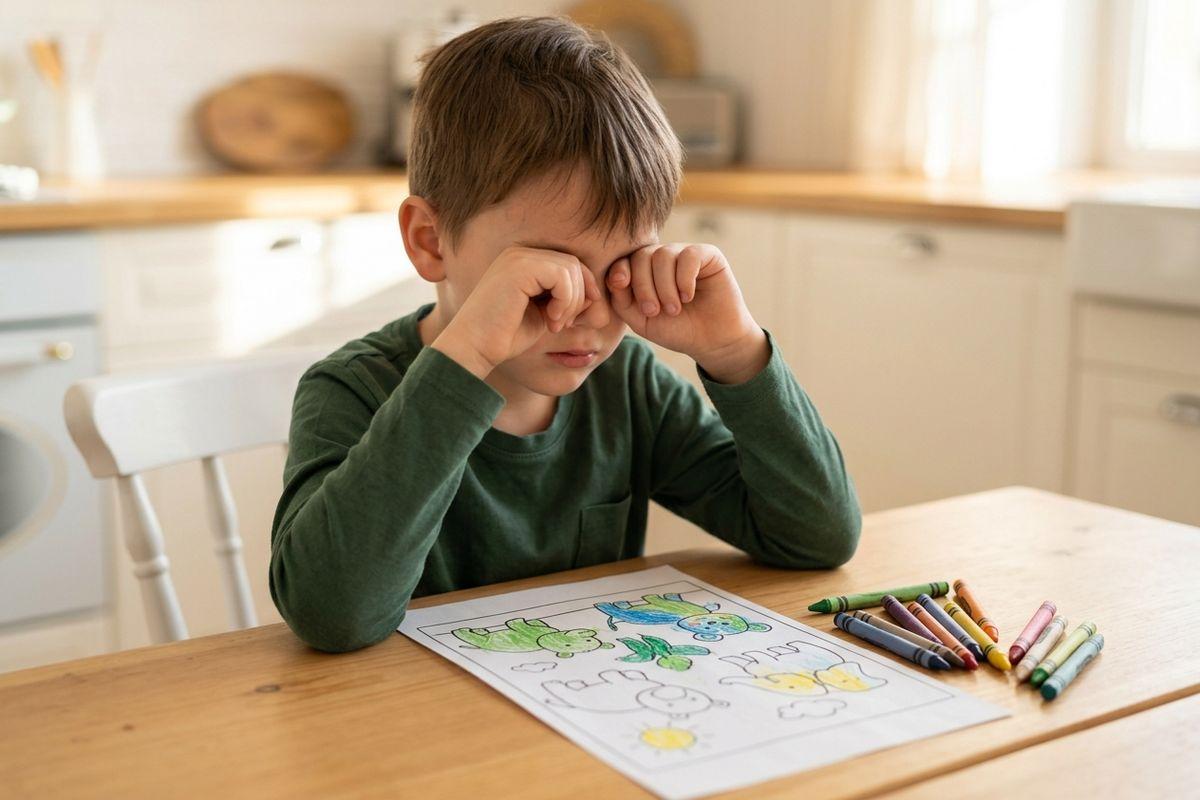
- Rubbing their eyes while reading or doing crafts
- Headaches after homework
- Tired eyes by the end of the school day
- Calling reading boring and avoiding books
A child who fidgets or drifts off during close work can seem distracted. In many cases, their eyes are tired from working so hard to focus.
School vision screenings often miss hyperopia because kids can usually read the letters on a chart across the room. If your child passes one, book a comprehensive eye exam anyway so their near vision gets checked, too.
How Children’s Vision Changes as They Grow
Your child’s eyes grow with the rest of their body, and myopia often increases as they do. It can keep progressing until about age 21, which is why regular monitoring matters through the teen years.
School-aged kids should have an eye exam every year from ages 6 to 19, even when nothing seems wrong. And if glasses that worked in the spring feel off by fall, book a visit instead of waiting for the next yearly appointment.
What Happens During a Children’s Eye Exam
We test your child’s vision up close and at a distance, so hyperopia doesn’t go unnoticed while their distance vision looks fine. Your optometrist also measures their prescription and checks the overall health of their eyes. Each of our clinics has imaging technology that gives us a detailed look inside the eye. Afterward, we’ll walk you through what we found and what comes next.
Depending on the results, your child’s plan may include:
- Glasses
- Contact lenses for older kids who are ready for them
- Myopia control options that can help slow a prescription that keeps climbing
New glasses or contacts can take a few days to get used to, so give your child some time before deciding something’s wrong. We’ll also set up yearly follow-ups so we can track any changes.
Book Your Child’s Next Eye Exam
Squinting at the board or rubbing their eyes over homework is worth mentioning, even if your child says everything looks fine. An exam can help you find out which focusing problem is behind it and how to help.
At Doctors EyeCare, we can explain what your child’s prescription means for their schoolwork and the activities they love. Contact any of our 3 clinics to book your child’s eye exam, and jot down the habits you’ve noticed at home and school to share with us.